
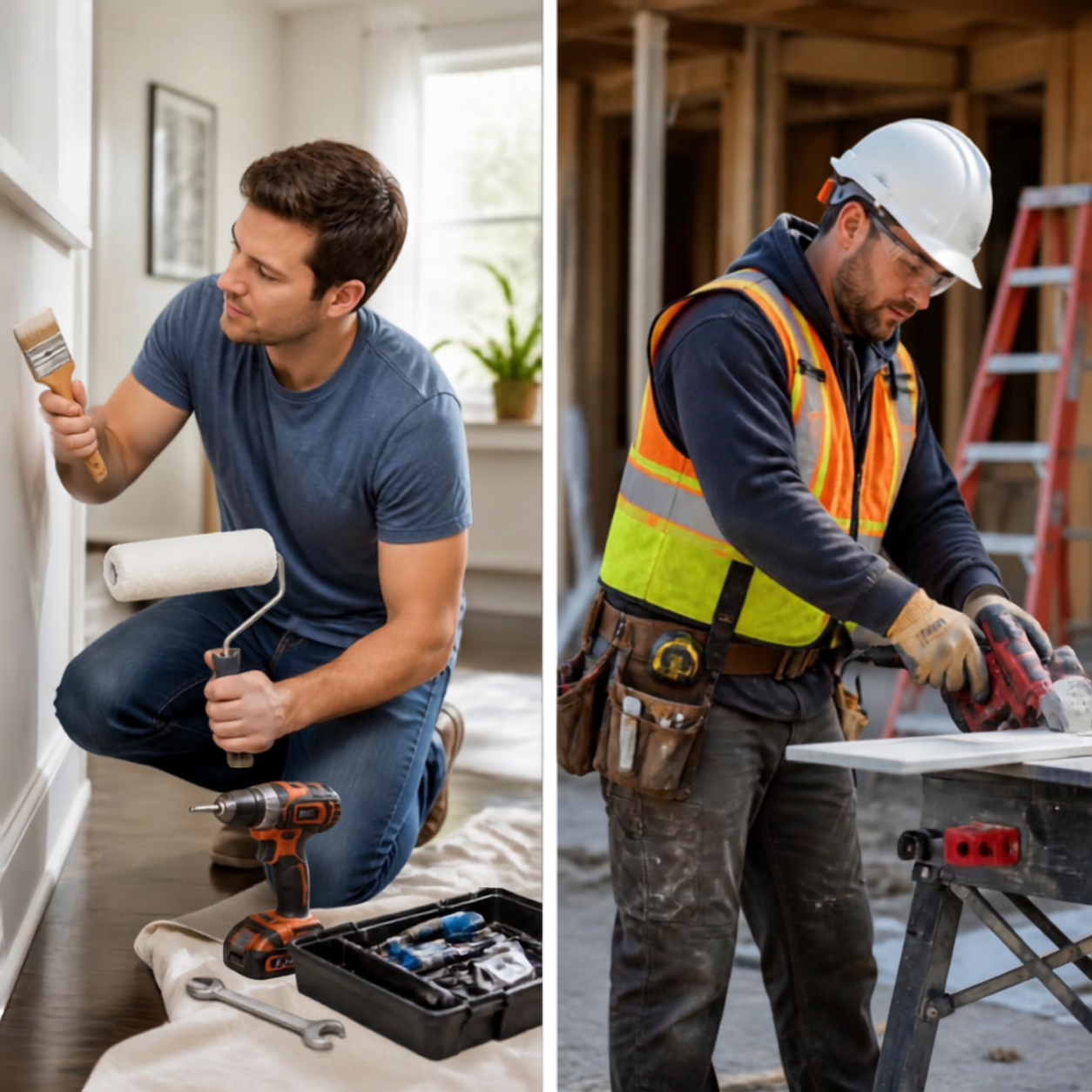
Knowing when to hire a tradesperson versus tackling a repair yourself can be the difference between a $150 fix and a $1,500 mistake. YouTube makes everything look doable — a leaky faucet, a flickering outlet, a sagging deck board — and it’s tempting to grab a wrench or a drill and handle it yourself.
Sometimes that’s the right call. Here’s how to tell the difference before you start.
Sometimes that’s the right call. Sometimes it turns a $150 repair into a $1,500 one. Here’s how to tell the difference before you start.
Good DIY Territory
Some jobs are genuinely low-risk, low-skill, and forgiving of mistakes. These are safe to tackle yourself if you’re reasonably handy — and don’t require you to hire a tradesperson:
- Caulking around a tub or window
- Replacing a toilet flapper or fill valve
- Patching small drywall holes
- Repainting a room
- Replacing a light fixture (with the breaker off)
- Basic yard and deck maintenance — resealing, cleaning, minor board replacement
If you mess one of these up, the fix is usually cheap and the risk to your home or safety is low.
Knowing When to Hire a Tradesperson
A few situations where DIY stops being a money-saver and starts being a liability:
Anything involving your electrical panel or new circuits — this is a job for a licensed electrician, not a weekend project. Beyond swapping a fixture, electrical work has real fire and shock risk, and in most areas it needs to be done to code and permitted. This is a call-an-electrician job, no exceptions.
Gas lines, furnaces, or anything involving your gas fireplace. Not worth the risk — full stop.
Structural work. Load-bearing walls, deck framing, foundation cracks. A mistake here doesn’t just cost money to fix, it can compromise your home’s safety.
Major plumbing — repiping, water heater installs, anything behind a wall. A small leak you don’t catch behind drywall can turn into thousands in water damage and mold remediation. Compare that to the cost of a plumber catching it in an hour.
Anything under warranty or insurance requirements. DIY work on things like roofing or major appliance installs can void manufacturer warranties, and insurance companies sometimes deny claims if unlicensed work caused the damage.
Jobs you can’t finish in a weekend. If you rip out a bathroom floor on Saturday and realize by Sunday night you’re in over your head, you’ve now got no working bathroom and a bigger repair bill than if you’d called someone from the start.
The Real Cost of DIY-Gone-Wrong
The math on DIY isn’t just materials vs. a tradesperson’s quote. Factor in:
- Your time (multiple weekends vs. one appointment)
- Tools you’ll buy and likely never use again
- The cost of fixing it twice if the first attempt fails
- Any damage caused by a mistake — this is where DIY projects get expensive fast
A good rule of thumb: if a mistake could mean water damage, electrical risk, or structural issues, the cost of hiring a pro upfront is almost always cheaper than the cost of fixing a DIY mistake later.
So You’ve Decided to Hire a Tradesperson — Now What?
Once you’ve decided when to hire a tradesperson is the right call, the next problem is usually finding someone reliable, available, and priced fairly — especially for something you want handled quickly.
JobWorks makes that part easy. Search local Shuswap tradespeople by skill — electrician, plumber, carpenter, and more — filtered by the towns they actually service, with their pricing structure listed right on their profile. No guessing, no cold-calling five contractors to find one who’s available.
If you’ve decided this one’s not a DIY weekend, check out our guide on how to find a reliable tradesperson near you, or head straight to JobWorks and get it handled properly the first time.